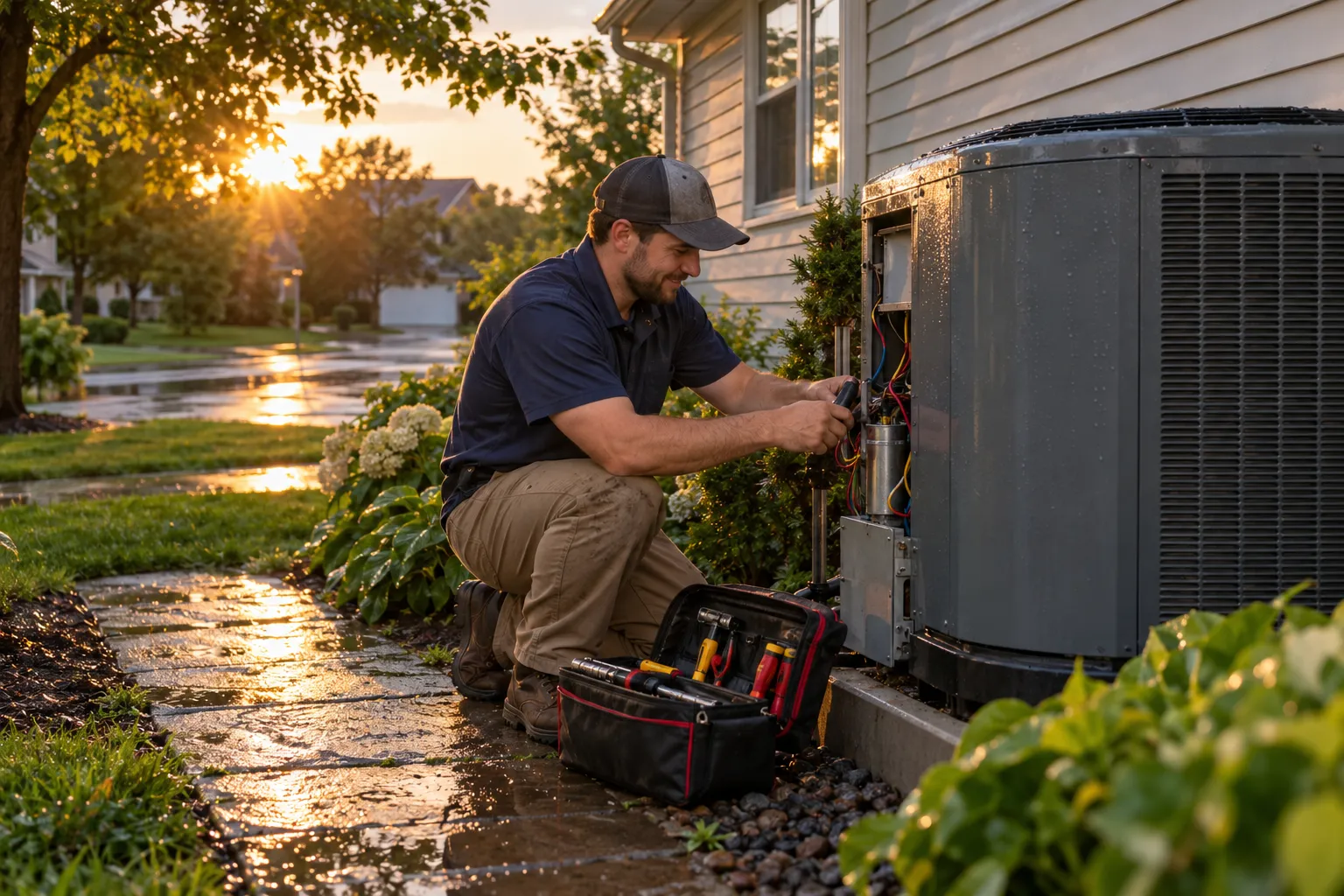
Need home ac repair in Charlotte?
Tell us what your system is doing and where you are. Mountedweak Heating & Air will pass your request to a local provider in our network. No obligation.
No obligationMany homeowners believe a warm house means the whole AC has failed. In practice, the cause is often smaller: a clogged filter, a tripped breaker, a worn capacitor, or a drain line that backed up. Good home AC repair finds the real cause before anything gets replaced, and that takes the right tools and training.
Mountedweak Heating & Air is a referral service. We do not do the repair ourselves. We help you sort out what is safe to check at home, then connect you with an independent local provider in our network. The provider tests the system, explains the problem in plain words, and gives you a written quote. In the Charlotte area, long humid summers and sudden thunderstorms are hard on cooling equipment, so a clear plan matters. Check, then call.
A lot of people think a hot house means the AC is dead. Sometimes it is. Often it is something small. Spend five minutes on the list below before you book a visit.
Some people think a handy homeowner can top off the refrigerant. In practice, refrigerant is a sealed system. If it is low, there is a leak, and adding more only delays the real fix. Handling it takes gauges, training, and proper recovery gear.
The same goes for opening electrical panels, touching capacitors, or taking apart the blower. Those parts can hold a charge even when the power is off. Leave them to a trained provider.
If the heat is severe and someone at home is very young, older, or unwell, treat it as urgent. Ask about emergency AC repair when you reach out. Request a callback to check provider availability, since it varies by provider and by how busy a heat wave has made the season.
While you wait, close blinds, run fans, drink water, and move to the coolest room. A stuffy bedroom upstairs is not the place to ride it out.
Here are the clues that usually point past a simple fix.
A frozen coil does melt if you turn the AC off. But it will freeze again if the cause is still there. Airflow trouble or low refrigerant is usually behind it. Switch the system off, let it thaw, and have a provider find out why.
Most visits follow the same path. The provider asks about the symptoms, then checks the thermostat, the filter, the electrical parts, the fans, the coils, and the drain. They measure airflow and refrigerant pressure with proper tools.
Then they explain what they found. You should get a clear price in writing before work starts. If something looks unsafe or worn, a good provider shows you the part and says why.
Capacitors and contactors wear out, especially after a summer of hard use and power surges from storms. They are small parts, but a trained provider should swap them.
The provider finds the leak, repairs it, then recharges the system to the right level. Skipping the leak search is a common shortcut that costs more later.
Humid summers push a lot of water through your system. A clogged condensate line can shut the AC down or leak into a ceiling, closet, or crawl space.
A motor that squeals or will not start needs testing. Sometimes it can be repaired. Sometimes it needs a new motor.
Many homeowners believe a system over ten years old must be replaced. Age matters, but it is not the whole story. A well-kept unit with one failed part can run for years more.
Replacement starts to make sense when repairs pile up, the compressor fails, or the system uses an older refrigerant that is hard to find. Ask the provider to explain both paths with numbers. Your repair provider can tell you if a new system deserves a closer look.
A repair is not the finish line. A little care afterward keeps the problem from coming back.
Treat this like car care. Small steps cost little and help you avoid a breakdown on the hottest weekend.
A provider tests the thermostat, power, airflow, and refrigerant to find the real reason your home is warm.
Worn capacitors, contactors, and motors can often be swapped without a bigger job.
Providers can trace refrigerant leaks and clear clogged drain lines that cause water trouble in humid weather.
Before work begins, the provider explains the problem, the options, and the price in plain terms.
Prices differ by system, parts, and how hard the job is to reach. These are typical U.S. ranges only. Always ask for a written quote before you agree to any work.
| Repair item | Typical range | Notes |
|---|---|---|
| Diagnostic visit | $75 – $200 | Often applied to the repair if you go ahead |
| Capacitor or contactor | $120 – $400 | Common after hot, stormy summers |
| Condensate drain clearing | $75 – $300 | Higher if the line is hard to reach |
| Fan or blower motor | $300 – $1,500 | Varies by motor type and access |
| Refrigerant leak repair and recharge | $200 – $1,500 | Depends on leak location and amount |
| Compressor replacement | $1,200 – $3,500 | Often compared with a new system |
Check the thermostat, breaker, filter, and vents. Many warm-house problems turn out to be simple.
Request a callback to check provider availability, or send the request form with your symptoms.
Get the cause, options, and price in writing before work begins.
Follow the upkeep tips so you avoid the same breakdown next summer.
We sort habit from fact, so you know what is safe to check before spending anything on a visit.
Mountedweak Heating & Air is a referral service. Independent local providers do all the repair work.
Providers in our network know how humid summers and storms affect cooling equipment in the Charlotte area.
Get simple tips to keep the problem from returning after the repair.
Tell us what your system is doing and where you are. Mountedweak Heating & Air will pass your request to a local provider in our network. No obligation.
No obligationCommon causes are a dirty filter, a frozen coil, low refrigerant, or a failed outdoor fan. Check the filter and thermostat first. If air is still warm, switch the system off and ask a provider to look.
It is not a safe do-it-yourself job. Low refrigerant means a leak, and handling it takes training and the right tools. A provider should find the leak, repair it, and recharge the system.
Age, repair history, and the failed part all matter. One worn part on a well-kept system is usually worth fixing. Ask the provider to compare repair and replacement costs in a written quote.
Tell us what your system is doing and where you are. Mountedweak Heating & Air will pass your request to a local provider in our network. No obligation.
No obligation